
Chintan aur Anuchintan
“Education is not the learning of facts, but training the mind to Think”
— Albert Einstein
Nai Talim, meaning “New Education” in Hindi, is a concept of education developed by Mahatma Gandhiji, emphasizing practical skills and vocational training alongside academic learning. It aims to create self-reliant individuals who can contribute to their communities, particularly in rural areas. Nai Talim focuses on learning in the mother tongue, incorporating handicraft work, linking work to local needs, and promoting socially useful and productive work.
Focus on Practical Skills
Learning in the Mother Tongue
Handicraft Work
Local Needs
Socially Useful Work
Holistic Development
Emphasis on 3Hs
Relevance to Gram Swaraj
Incorporating Nai Talim into Modern Education & Governance Policy
In the present context, Mahatma Gandhiji’s idea of Nai Talim can be integrated into contemporary education policy by adopting the following core practices:
1. Value-Based Education & Character Ranking
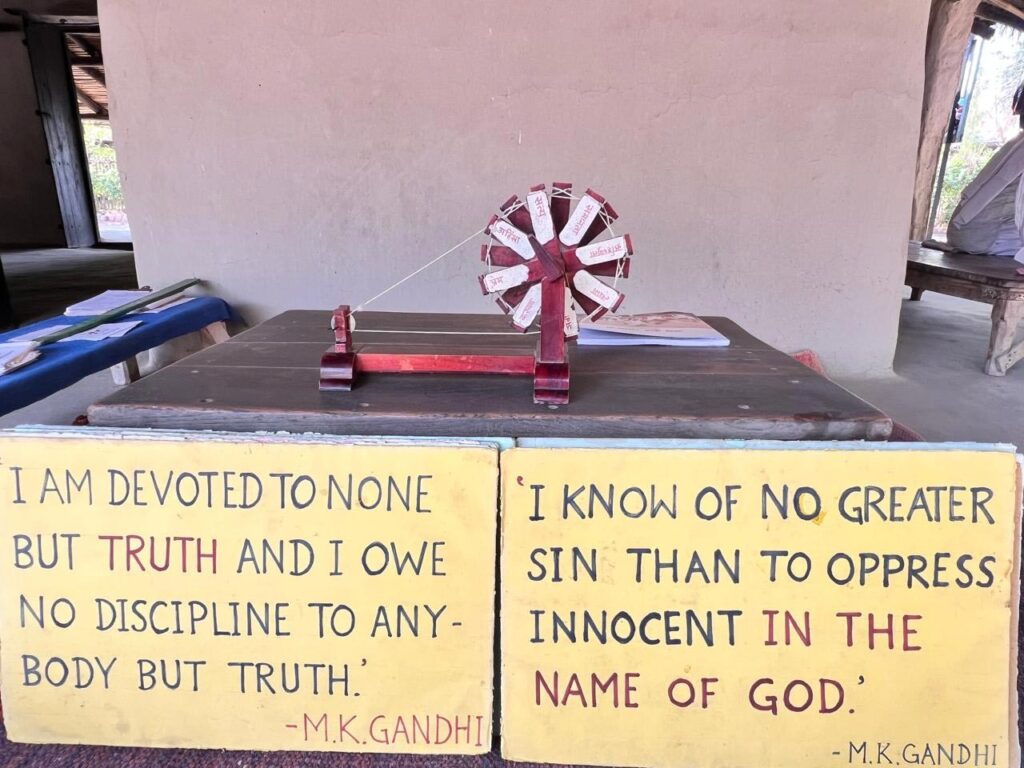
To groom children into ethical citizens, value-based education is essential. Alongside academics and sports, students should be ranked on their practice of Mahatma Gandhiji’s 8 Mantras of Good Values:
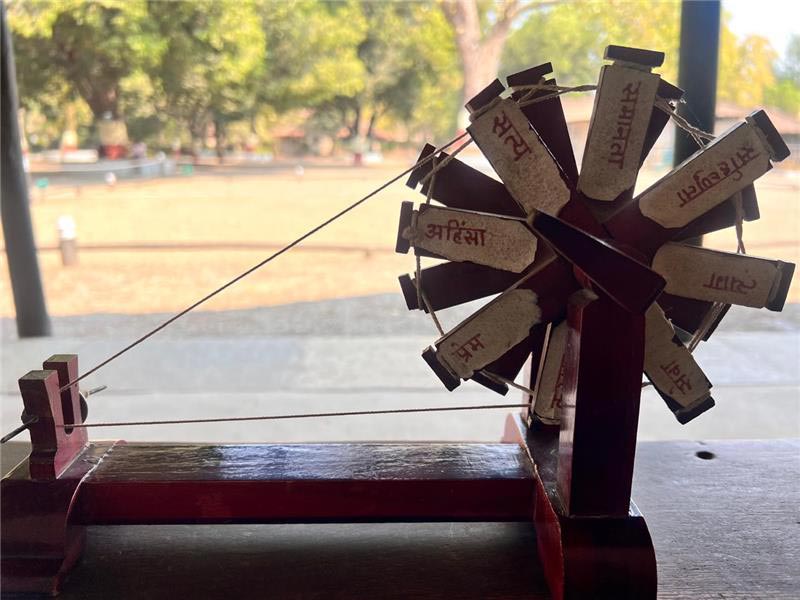
Karuna (Compassion) • Prem (Love) • Ahimsa (Non-violence) • Satya (Truth) • Samanata (Equality) • Sahisnuta (Tolerance) • Tyag (Sacrifice) • Seva (Service)
“Academic marks and sports open doors to a first job, but high ranking in human values makes one a good human being for life.”
2. Early Skill-Based Vocational Training (Classes 6–12)
Introduce practical skill development from Class 6 through 12, ensuring every student graduates high school certified and proficient in at least one vocational trade.
3. Youth Engagement & Rural R&D
Address youth unemployment and associated social issues by engaging educated young adults as Grassroot Knowledge Experts. Through cutting-edge skill building, village-level R&D, and corporate collaborations, governments can create meaningful employment opportunities at the local level.
“The soul of India lives in its villages.”
— Mahatma Gandhi
4. Village Enterprise & Public-Private Partnership (PPP)
True holistic development for India and Odisha requires viewing each village as a joint-holding enterprise. Managing rural development under corporate governance principles via Public-Private Partnerships (PPP) ensures sustainable local wealth creation.
5. Village SWOT Analysis & Local Industry Expansion
Conduct systematic SWOT (Strengths, Weaknesses, Opportunities, Threats) evaluations for every village using local youth. This drives tailored employment in agro-processing, textiles, handloom weaving, rural tourism, and local manufacturing.